Welcome to the twenty first blog post for The Lawyer Files!
Thank you, as always, for subscribing and following the journeys of tomorrow’s legal leaders. Each edition brings you honest reflections, practical insights, and inspiring stories from aspiring solicitors carving out meaningful careers in the legal profession.
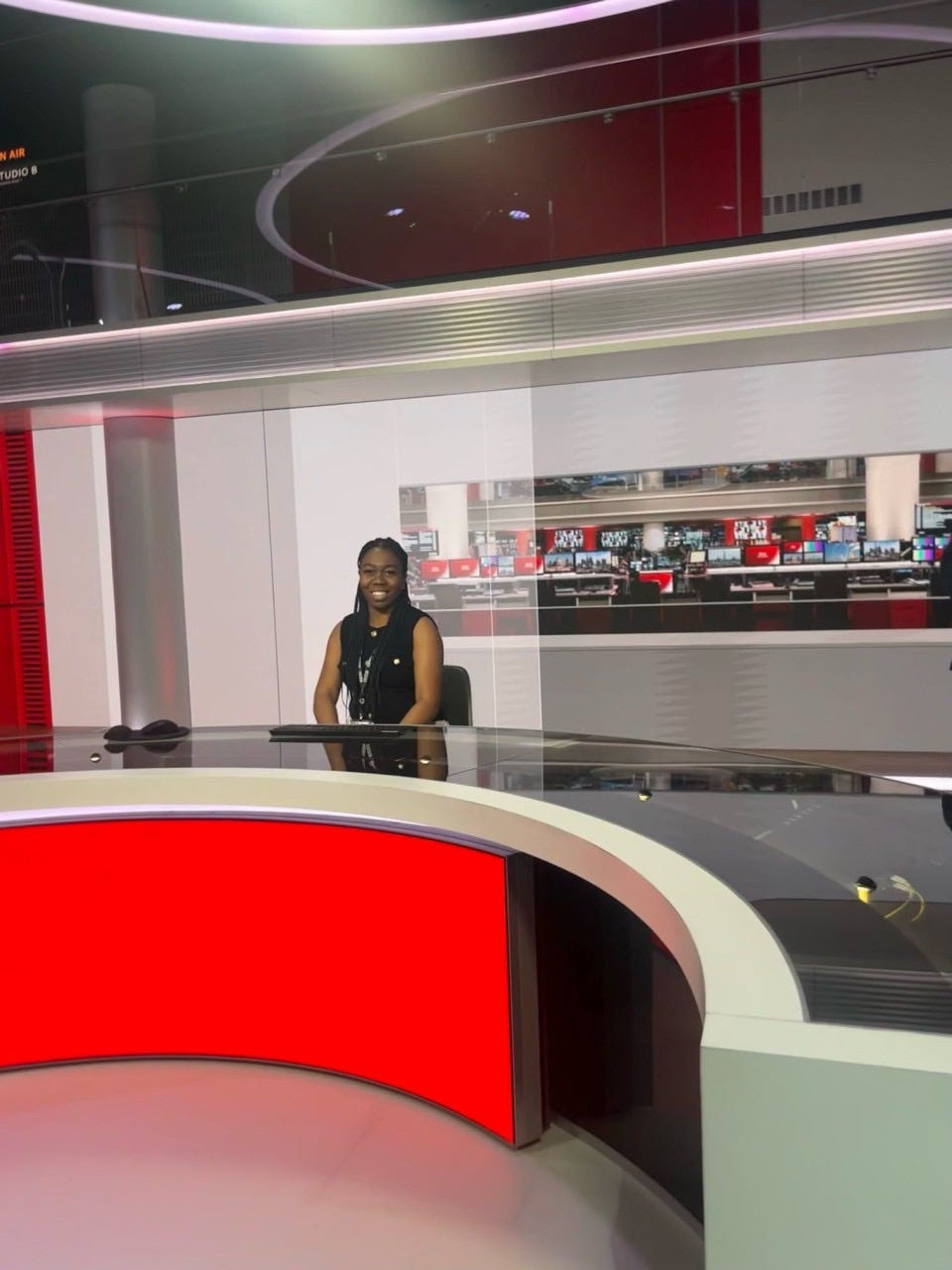
✨ In this edition, we feature Chimere Nwosu, a Trainee Solicitor at the BBC, whose path into law is a powerful blend of purpose, adaptability, and public impact. From her early days in retail to navigating contracts in live broadcast environments, Chimere’s journey is shaped by curiosity, communication, and a clear sense of civic responsibility.
Her initial interest in law was sparked by true crime documentaries — but it was the political shifts of Brexit and her academic grounding in Political Communication that steered her toward regulatory and media law. She later found her stride at the BBC through their Solicitor Apprenticeship, where she now balances client-facing legal work with structured academic study, gaining hands-on experience across fast-moving and high-stakes departments.
What makes Chimere stand out is her ability to bring soft skills to complex environments. Whether building rapport from her Argos days or safeguarding ethical communication across the ASA and BBC, she’s learned to connect, adapt, and add value at every level.
Her reflections on growth, purpose, and pacing yourself in the legal profession are refreshingly grounded — a reminder that great lawyers aren’t just made in lecture halls, but in the everyday practice of empathy, resilience, and service.
Let’s dive in 🚀

- You’ve had such a dynamic journey—from the Civil Service internships to now training as a solicitor at the BBC. What first sparked your interest in law and public affairs
Initially, my interest in law was centred on criminal law and criminal justice, influenced by my fascination with true crime documentaries and legal dramas in my early teenage years. However, during my mid teenage years, significant global events—Brexit and the election of Donald Trump—prompted a shift in my interest. These developments heightened my awareness of political and societal issues, sparking a deeper curiosity about public affairs.
At the time, I was studying Sociology at A-level, which encouraged me to critically analyse societal structures and question the world around me which sort of replaced criminal law being my main interest, and led me to pursue an undergraduate degree in Politics and Sociology, followed by a master’s in Political Communication. During my master’s I was able to undertake a media law module which I absolutely loved and led me to this path.

- What inspired you to pursue the solicitor apprenticeship route at the BBC, and how does it differ from a traditional training contract experience?
I chose the solicitor apprenticeship route because it was the format offered by the BBC’s programme—and it had everything I wanted in a role. It was in-house, focused on media law, and of course within the BBC—an organisation I have been wanting to work at for years. So, when I saw the opportunity, I jumped at it.
What made the apprenticeship particularly appealing was the balance of work and study. Being paid while training, with a dedicated day ring-fenced for classes and study showed that the BBC genuinely values its trainees learning and development.
In terms of how it compares to a traditional training contract, the key difference is that trainee’s study and work simultaneously, whereas in a typical training contract, trainees usually complete the SQE or LPC beforehand. Despite this distinction, the overall structure remains quite similar to a traditional training contract.

- What does a “day in the life” look like for a trainee solicitor at the BBC?
There’s no such thing as a “typical day” for a trainee solicitor at the BBC—and that’s one of the things I love most about working here. As a 24/7 organisation, the work is often shaped by external events like breaking news. The nature of each day also depends on the type of seat you’re in, as contentious and editorial seats generally tend to be more fast paced compared to non-contentious and contractual seats. I’ve sat in two different areas, and even within those, my daily experiences have been completely different. For example, in the commissioning team, if a prominent figure passes away and the BBC wanted to air a tribute programme, I might need to urgently review the contract to ensure we have the necessary rights to broadcast it. In contrast, when I was in litigation, breaking news could create situations where a lawyer required immediate legal research to support their advice to the client.

- In a world of fast-moving digital media, how important do you think legal professionals are in shaping fair and responsible messaging?
As legal professionals, we set the tone for fair and responsible messaging. If we don’t lead by example, how can we expect our clients to? Trust in many industries is fading, especially with the rise of AI, and if people start losing confidence in the legal profession it could seriously impact society.
Media lawyers have a big role to play in making sure messaging stays honest and fair. They deal with all sorts of challenges, from companies greenwashing their image to misinformation spreading on social media and children being exposed to harmful content. It’s crucial that they keep fairness and responsibility at the heart of what they do, guiding their clients to communicate in ways that are fair, responsible and trustworthy.

- What’s one lesson or experience that’s stayed with you throughout all your professional roles so far?
One key lesson I’ve carried through all my professional roles is to never underestimate the value of so-called ‘soft’ skills—especially those gained in your personal life or non-professional jobs. These skills are often overlooked, but they play a crucial role in the workplace.
For instance, my first job at Argos when I was 17 helped me develop strong communication skills and the ability to quickly build rapport with customers. That experience has translated directly into my current role, where I regularly engage with lawyers and other colleagues within the BBC and need to establish effective communication and relationships with them. Additionally, the organisational skills I’ve honed in my personal life—such as maintaining to-do lists for errands like grocery shopping, visiting the bank, or scheduling my car’s MOT—have proven invaluable in a professional setting. They’ve helped me manage priorities, meet deadlines, and maintain effective time management. All key skills needed to work in the legal profession.

Chimere Nwosu – https://www.linkedin.com/in/chimere-nwosu-681857161
Trainee Solicitor at BBC
Thank you for reading the eighteenth edition of The Lawyer Files.
I hope Chimere’s story has inspired you — especially if you’re considering alternative qualification routes, balancing work and study, or wondering how your background outside law can still be your greatest strength.
Her journey is a reminder that adaptability, purpose, and strong communication skills can carry you far — whether you’re drafting contracts in fast-paced media settings, navigating public trust in broadcasting, or learning how legal teams support ethical communication on a national scale.
From retail floors to regulatory bodies, Chimere shows us that every experience matters. Becoming a great lawyer isn’t just about legal knowledge — it’s about knowing your audience, staying grounded, and leaning into your values with intention.
🎧 Stay tuned — our podcast episode with Chimere is coming soon on Spotify, Apple Podcasts, Amazon Music & Audible (TheLawyerFiles), where we dive deeper into her path from Political Communication to media law, how she navigated the solicitor apprenticeship route at the BBC, and why transferable skills from Argos were more useful than you’d think.
We’ll also explore her thoughts on ethical lawyering, what she’s learned from high-pressure environments, and how she’s carving out space for herself in one of the UK’s most respected institutions.
Make sure you’re subscribed so you don’t miss it.
Until next time — stay curious, stay reflective, and keep showing up with purpose. 🎙️📚💼
— Denice Obeng 🙂