Welcome to the fifteenth blog post for The Lawyer Files!
First off, thank you for subscribing and following the journeys of tomorrow’s legal leaders. Each edition brings you real stories, sharp insights, and thoughtful reflections from aspiring solicitors carving their own path into the legal world.
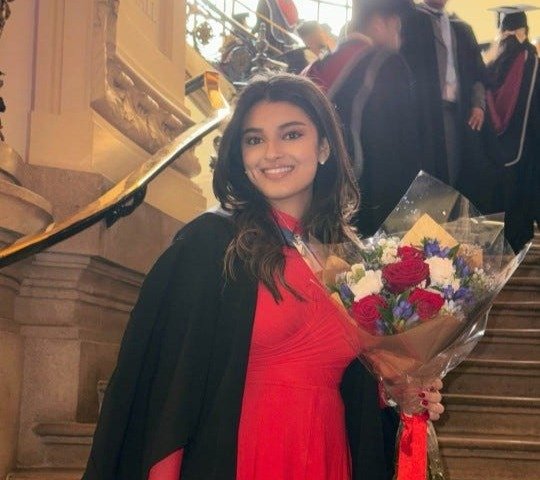
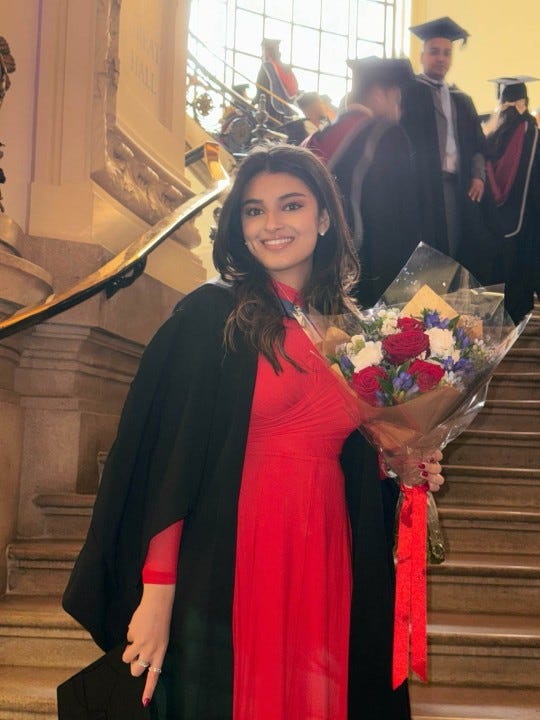
✨ In this edition, we feature Humna, a future trainee solicitor at Charles Russell Speechlys, whose story blends academic depth, cultural fluency, and an unwavering sense of purpose. From exploring philosophy and Cicero at King’s College London to training as a black belt martial artist, her path into law has been anything but conventional — and all the more powerful because of it.
Humna’s story begins with early exposure to the legal world through her mother’s family law practice, but her independent passion for law grew during a mock trial in sixth form. That curiosity turned into conviction through studying philosophy, where thinkers like Socrates and Hobbes helped shape the analytical mindset she brings to legal practice today.
What sets Humna apart is her global lens and grounded discipline. She’s interned at Herbert Smith Freehills in Dubai, observed the fast-evolving legal landscape in the GCC, and found strength in representation as a British Pakistani woman navigating City law. Outside the office, her role as a Choi Kwang Do black belt and assistant instructor adds another dimension — revealing resilience, mental clarity, and a deep dedication to continuous growth.
Whether reflecting on the GDL, international law, or her training journey, Humna brings a refreshing balance of humility and strength. Her advice for non-law students transitioning into the profession is practical and encouraging: stay curious, stay commercially aware, and don’t underestimate the value of your unique background.
Her story is a reminder that there’s no single way to become a lawyer — and that every philosophy essay, martial arts drill, or career fair conversation can build a sharper, more grounded future solicitor.
Let’s dive in 🚀

1. You studied Philosophy at King’s College London before completing the GDL—what drew you to law, and how did Philosophy shape your thinking as a future solicitor?
I was exposed to law from a young age, my mum is a divorce lawyer and runs her own practice. During school holidays, I often spent time in her office and observed lawyers. My own interest in the profession sparked in sixth form, when I took part in a mock trial and realised I couldn’t see myself doing anything else. I became genuinely fascinated by the legal process and role of advocacy. I also really enjoy learning about the Classics, having studied Latin Literature at A-level. I was completely fascinated by Cicero’s speeches and how he wielded language and argument, as lawyers do when they litigate. Studying philosophy further strengthened this path, equipping me with sharp analytical skills, structured argumentation, and critical thinking. Exploring logic, methodology, and the works of philosophers who influenced modern legal systems gave me a strong foundation for the GDL. For example, learning about Socrates’ ‘Elenchus’, or Thomas Hobbes’ ‘State of Nature’ deepened my understanding of the intellectual framework underpinning the law.

2. Congratulations on securing a training contract with Charles Russell Speechlys! What was that process like, and what helped you stand out in such a competitive environment?-
Thank you! Balancing GDL studies with applications was challenging, but I found the CRS process genuinely engaging and well-structured. I felt I could fully showcase my skillset, and the Early Talent team were approachable and supportive throughout. I applied only to firms that aligned with my long-term goals. CRS stood out for its dual expertise in corporate/commercial and private client work, as well as its strong international presence, particularly in the Middle East. Applying selectively allowed me to present tailored, well-researched applications. If you are applying for 50 firms, and they’re all completely different, it won’t work. Applicants should find firms that they actually want to work at, strongly showcase why, and that will make you standout.
Another way to stand out is to make the most of your undergrad by joining societies and undertaking extra-curriculars. Having some non-law talking points that helped convey who I am beyond academics really helped. University is a time which a lot of people take for granted, so maximise the opportunities that are so easily available to you.

3. You also interned at Herbert Smith Freehills in Dubai. How did working internationally shape your outlook on commercial law?
I really enjoyed my vacation scheme with HSF Dubai. My seat was in Corporate M&A, and the energy in DIFC is unmatched. Working in the Middle East has been a dream of mine since I was a young girl. Not only because of the great weather and cultural familiarity, but the GCC is a really promising place to be a lawyer. With developments like Saudi’s Vision 2030, for example, the region is a really exciting and developing part of the world, subsequently making it a hotspot for legal professionals. CRS have offices in Bahrain, Qatar and Dubai, so the vac scheme definitely cemented my desire to do an international secondment there in the future.
Being a British Pakistani, the international element was something important to me. At HSF Dubai it was inspiring to see so many women from ethnic minority backgrounds thriving in the commercial law atmosphere, typically male driven. My culture is very important to me – I want to see more of us in city law, and it was refreshing to witness this in the Middle East.

4. You’re also a black belt and Assistant Instructor in Choi Kwang Do. Has martial arts influenced your discipline, mindset, or approach to legal challenges?
Martial arts definitely played a significant role in shaping who I am today. CKD is non-competitive. It taught me to channel negativity and hardships into training. It’s almost like meditation, but also learning self defence and acquiring an invaluable life skill at the same time. I started off feeling quite intimidated and shy, being a brown girl in martial arts isn’t very common. But the culture at CKD is super inclusive, supportive and diverse. CKD allowed me to grow my confidence and flourish. I try to advocate for more brown girls to join Choi and I hope I can do the same in the legal world.
It’s helped me discipline myself with my work ethic too. Training for my black belt grading back in 2022 was the second toughest thing I’ve had to do (the first being SQE, what I’m doing right now). It was a 3-hour grading and I was still at uni, and training 4 times a week doing intense cardio and sparring with difficult people. I had to watch what I ate too. But that regimented routine and experience definitely helped me implement that very-same mindset for SQE. The training element is incredibly invaluable, but the teaching element is another added bonus. I became an instructor after getting my black belt, and I acquired so many different skills by teaching the art too. Being patient, managing my time in class if I’m taking drills, adapting to change when mishaps occur. These also will help me when I begin my TC. When you teach, you reflect on so much about yourself, and I am learning more and more everyday.

5. What advice would you give to students transitioning from non-law backgrounds into law?
I honestly think the GDL was a great thing to do if you are going down the SQE route, because it prepares you with the key underlying law modules that are imperative for the SQE. I secured my HSF vac scheme during my undergrad when I hadn’t done law – it doesn’t hinder you! I also feel that doing a degree in something other than law makes you that much more of a well-rounded lawyer. I love the fact that I did philosophy. It gives you that much more to speak about in your applications, making you a future lawyer with a more diverse skillset/palette – so don’t think your non-law degree is something you can’t talk about. The GDL is intense, so just make sure you are keeping on top of everything every week. Also, keep up to date with what’s happening in the legal world constantly. LinkedIn and Ziplaw are great ways to keep connected. Message people and network. KCL offers many non-law society events from their law- soc, so have a look and see what your university law society has on offer. Keep commercially connected. Apply to insight / open days, they are on offer for non-law students too. You will meet so many people on those schemes, and they will be great connections to keep.

Humna Zubair – https://www.linkedin.com/in/humna-zubair-3445b5206/
Future Trainee Solicitor @ Charles Russell Speechlys
Thank you for reading the fifteenth edition of The Lawyer Files!
I hope Humna’s journey has inspired you—especially if you’re coming from a non-law background, juggling studies with applications, or navigating what it means to bring your full identity into the legal space. Her story is a powerful reminder that your background is not a barrier but a strength.
Whether it’s applying philosophical reasoning to legal problems, embracing cultural representation in international law, or channelling discipline through martial arts, Humna shows us that becoming a solicitor isn’t about fitting a single mould—it’s about bringing intention, resilience, and authenticity to the path you choose.
🎧 Stay tuned — our podcast episode with Humna is coming soon, where we’ll dive deeper into her journey from philosophy student to future trainee at Charles Russell Speechlys, how she found confidence through martial arts, and why embracing your individuality can be your biggest asset in law.
We’ll also talk about breaking into the legal world from a non-law background, navigating international experiences, and the discipline behind balancing SQE prep with real life.
Make sure to subscribe so you don’t miss it!
Until next time — stay grounded, stay curious, and trust in the value of your unique path. 💭⚖️🌍
— Denice Obeng 🙂