Welcome to the twelfth blog post for TheLawyerFiles!
First, thank you for subscribing. Please stay tuned for insightful interviews, expert advice, and real-life experiences from legal professionals to help you navigate your journey to becoming a solicitor.
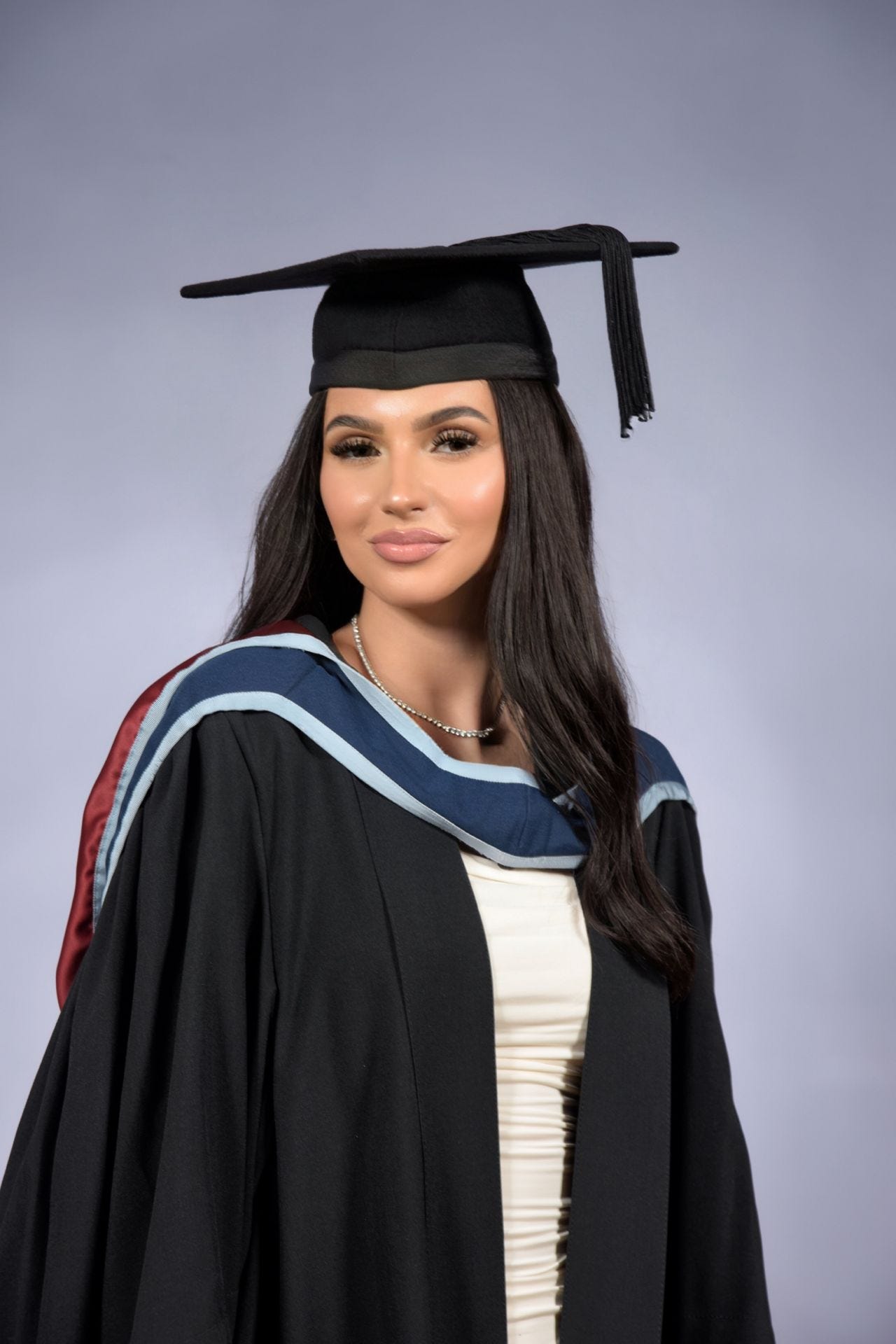
In this edition, we feature Adriana Zahirović, an AML & Conflicts Paralegal at Mishcon de Reya LLP whose legal journey is defined by academic excellence, community engagement, and a deep commitment to making the law more accessible. From graduating with a First-Class LLB to earning an LLM LPC with commendation, Adriana’s path reflects discipline, self-awareness, and a passion for learning through action.
Her work extends beyond law firms—contributing legal commentary to GRM Daily’s Law Schooled, she brings legal knowledge into mainstream and creative spaces. Adriana also plays a valuable role in mentoring aspiring lawyers, encouraging open dialogue, and challenging the gatekeeping of legal knowledge.
This feature is a reminder that becoming a great lawyer isn’t just about technical skill—it’s about curiosity, generosity, and showing up with intention in every space you enter.
Let’s dive in! 🚀

- Graduating with a First Class LLB and later an LLM LPC with commendation is a major achievement—what habits or routines helped you stay focused during your studies?
I would say that a lot of the beginning of my studying was where I had to do a lot of trial and error to see what best worked for me.
In my final year of my LLB I started the year by collating all the feedback I had received in my first and second year and created a word document which outlined everything I did well and everything I needed to improve on. This helped me identify any trends and patterns. For example, I was not the best at writing conclusions in my essays – I used to either over explain, introduce new topics or once when I was super stressed writing an essay I concluded the contrary. Once I figured out what I needed to improve – I used resources my uni gave me and previous essays where I concluded well and made sure to pay extra attention to this when writing.
As well as this, anything I did well for example, critically analysing or referencing I would flag those essays and use them as inspiration when writing. This really helped when referencing as I feel like it can be tricky – so instead of using a provided guide I just used my own work.
Planning my essays was also an essential skill I had to undertake and believe it made a very big difference. Depending on how long we had, I would split my time between: re-watching lectures relevant to the essay question and making notes; researching the topic on lexis nexis and westlaw to use in the write-up; and then planning my PEE/PEARL paragraphs. This meant that my write-ups were super quick and easy – although not advised I did a lot of my write-ups a day before the deadline as I was prepared.
Throughout my studies I had a part-time retail job which really helped my time-management skills. A lot of my weekends were taken up and I also did not work in the same city/town as where I lived for university. However, having this responsibility alongside my studies helped me set aside time for both and also helped me realise that there is always time for everything.
Lastly, a can-do and positive attitude really helps. I entered my study times with positivity and believed I would achieve well. This can be tricky as I do believe I slipped with this in my Masters however, it is so important and can really make a difference to how you approach your studies or any goal you have.

- You’re currently an AML & Conflicts Paralegal at Mishcon de Reya LLP. Could you walk us through a typical day and what skills are essential in this role?
The paralegals in my team work on a rota so we are always on a different task every week which keeps the work interesting. Some weeks can be a bit more admin heavy, where we support all the matter teams across the business which requires interpersonal skills and confidence especially when speaking to partners that may be short on time or need things actioned quickly.
However, some tasks require more extensive research and due diligence. A lot of the times we are looking at client documents and must make sure we have great attention to detail. Every day at work I will communicate with more than 2 people so remaining friendly and ready to help seniors is also a key skill.
From buddying new paralegals, I have also found that when asking questions to a senior or for help, always ask with a potential solution as people really appreciate it. Also, if you are corrected on something you thought was right you are more likely to remember for the future. It is also essential to make notes as no one is expected to know everything – but making the information you come by easily accessible and noted is essential.

- As an article contributor to GRM Daily’s ‘Law Schooled,’ how do you approach making legal topics accessible and engaging to a wider audience?
Ensuring that they are visible on platforms or in spaces where they will be easily seen is the main thing. For example, GRM Daily’s platform is accessible to artists and music lovers, so it is the perfect location to reach the target audience. To make it engage as well, it is paramount that the topics are not over-complicated and are relevant – using real life examples and trending topics also helps keep readers engaged.
On a wider note, individuals interested in law and want to either learn more or pursue a career are from a range of different backgrounds and circumstances. Making law more accessible is paramount – legal advice and support should be free to an extent to the average person, so they are aware of their rights and are not exploited. That’s why law centres and other charities are important. In terms of students or professionals willing to enhance their knowledge finding outlets where knowledge can be shared for free is also vital. That’s why what you’re doing is amazing as it ensures knowledge is not gate-kept and can benefit everyone who may not be able to subscribe otherwise.

- You’ve been both a mentee and a mentor—what’s the most valuable lesson you’ve learned in each of those roles?
As a mentee I have learnt the importance of having someone in your profession to guide you. Individuals with more experience than you or have experienced similar things always have invaluable wisdom. I believe that no matter what stage you are at, you always need people who will inspire you. Also, by building connections as both a mentee or mentor you expose yourself to allowing for people to sponsor you – meaning they will think of you or put you forward for opportunities they come across that seem as though will suit you.
As a mentor I have learnt patience and how to ensure I am always available – it has also helped me learn how to approach my seniors in a personal and professional capacity and how to make their lives easier which is key in a busy working environment.

- What legal areas or case types have you found most intellectually exciting so far, and why?
I really enjoy intellectual property law. I find so many areas of law interesting – I am a true crime girly! However, I find IP super interesting. Not a lot of people think of the legal process within the media we consume daily such as their favourite series on Netflix or when listening to music – a lot of these trends I have had the opportunity to assess when contributing to the law-schooled articles I have written. Songs that we listen to for 2-3 minutes may have copyright rights that have been negotiated for long lengths of time or not even owned by the artists and discussed in great lengths so I find it very interesting how easily it can be overlooked.
Law has the power of being very interesting and there is a chance of further exploring your passions. The breadth of areas of law is truly exciting and extends further then the ‘core modules’ – whether it is fim, music, sport, fashion – the possibilities are endless.
Throughout my time at Mishcon and being exposed to various cases, I have also found reputation law quite interesting. It does come under the umbrella of media/innovation as it touches on elements of defamation and privacy. It is interesting to see, especially with famous people how thin the line is between what is in the public interest and when their privacy is compromised. A lot of the time when celebrities or people in the public eye are under scrutiny, they look for legal advice – essentially the lawyers are a part of the PR time which is super interesting.

Adriana Zahirović – https://www.linkedin.com/in/adrianazahirovic/
Paralegal @ Mishcon de Reya
Thank you for reading the twelfth edition of The Lawyer Files!
I hope Adriana’s journey has inspired you, whether you’re refining your legal study strategies, exploring unconventional platforms like GRM to share legal insight, or figuring out how to show up confidently in professional spaces. Her story reminds us that legal excellence isn’t one-dimensional, it’s built through reflection, resilience, and a willingness to make knowledge more accessible to others.
🎧 Stay tuned—our podcast episode with Adriana is coming soon, where we’ll explore her path to Mishcon de Reya, her experience navigating both corporate and creative spaces in law, and how she’s supporting others through mentorship. Make sure to subscribe so you don’t miss it!
Until next time—keep learning, keep growing, and keep showing up as your full self. 💼📚✨
— Denice Obeng 🙂